Niederrheinmuseum Wesel

Niederrheinmuseum Wesel
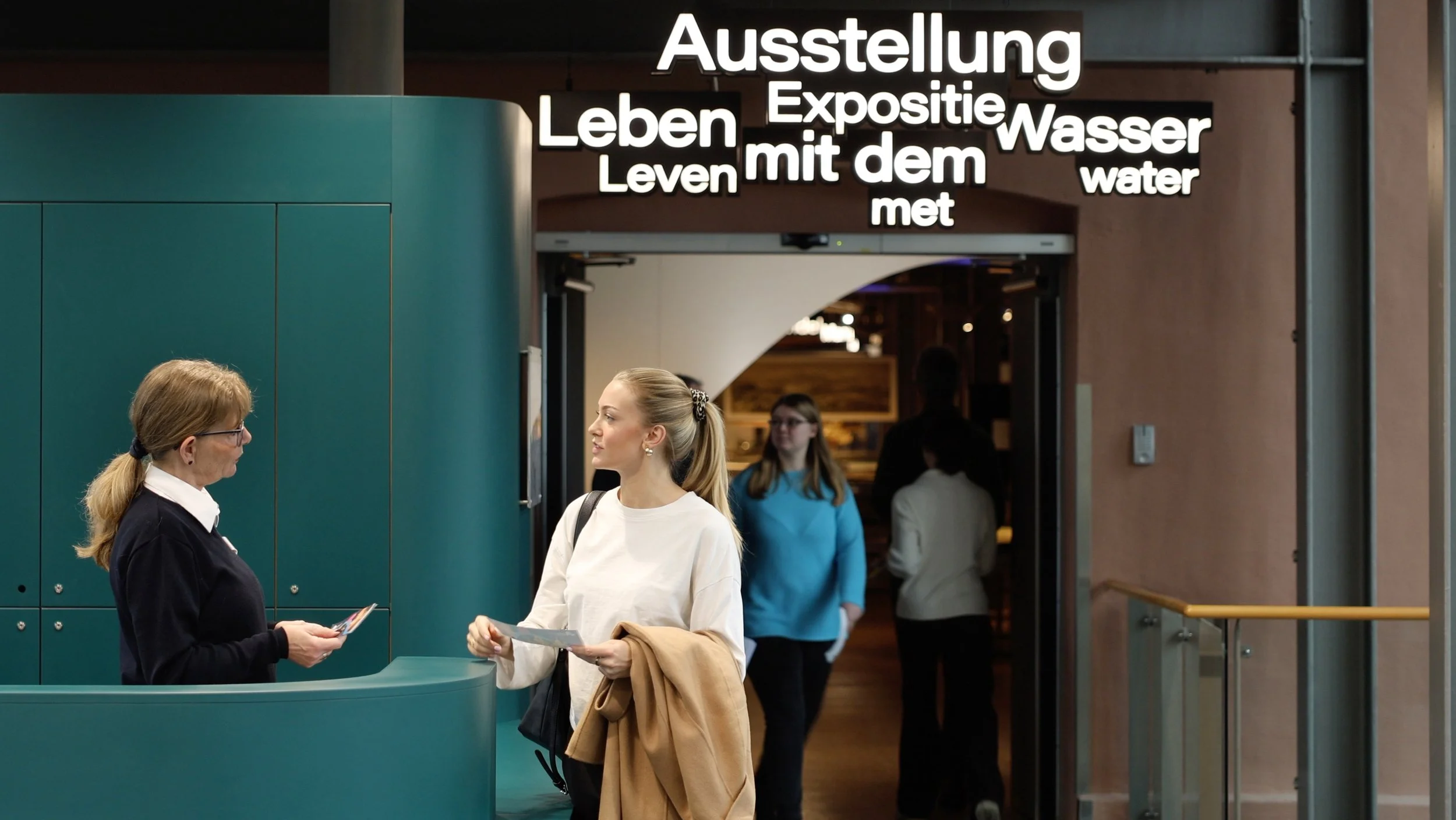
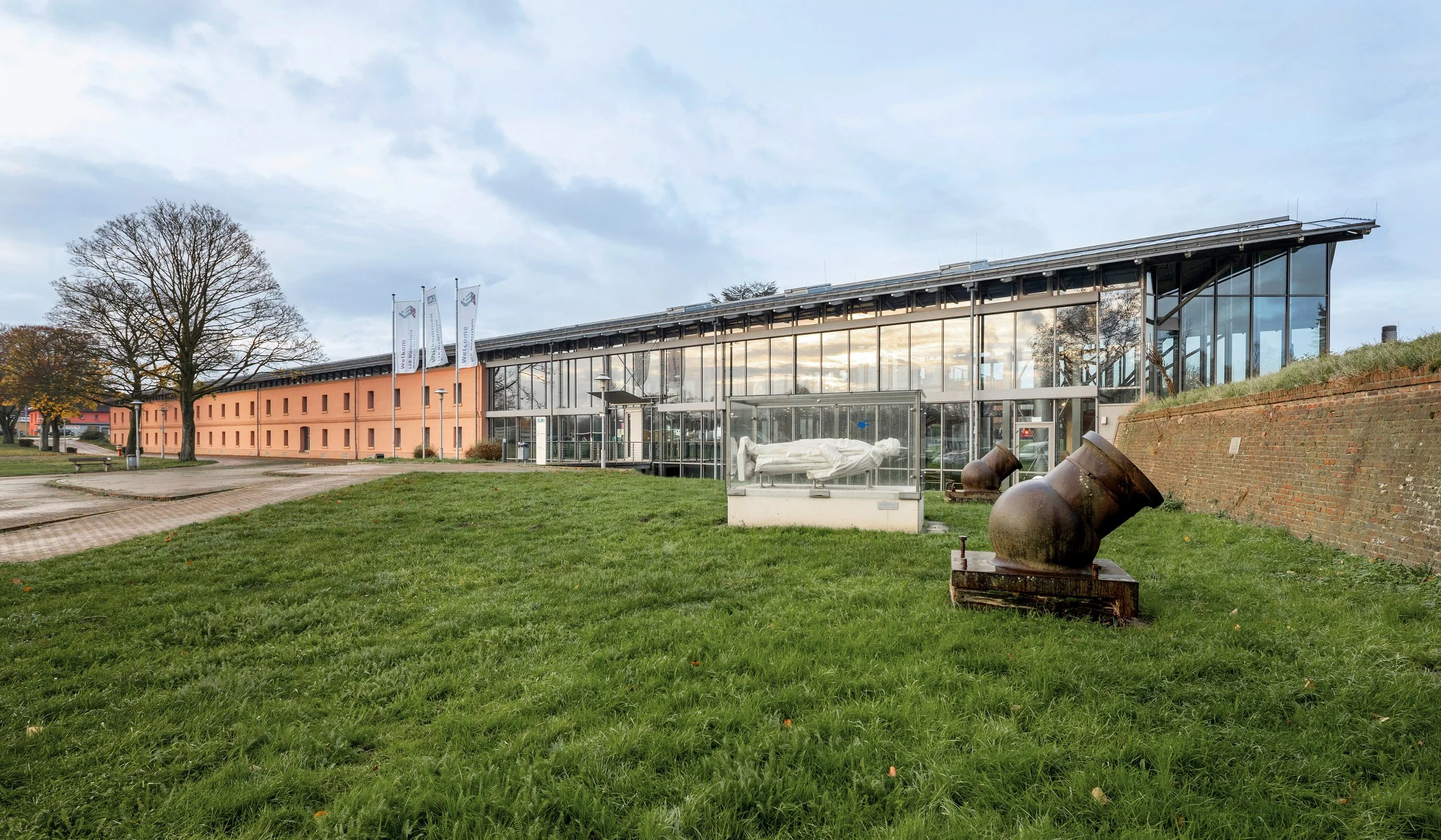
“Living with Water“– a new family friendly regional museum on the Rhein
COORDINATION is responsible for the redesign and renovation of the Niederrheinmuseum in Wesel – one of the largest national exhibition projects of 2025. Visitors can look forward to a completely reimagined, interactive, family friendly regional museum with an emotional and lively scenography.
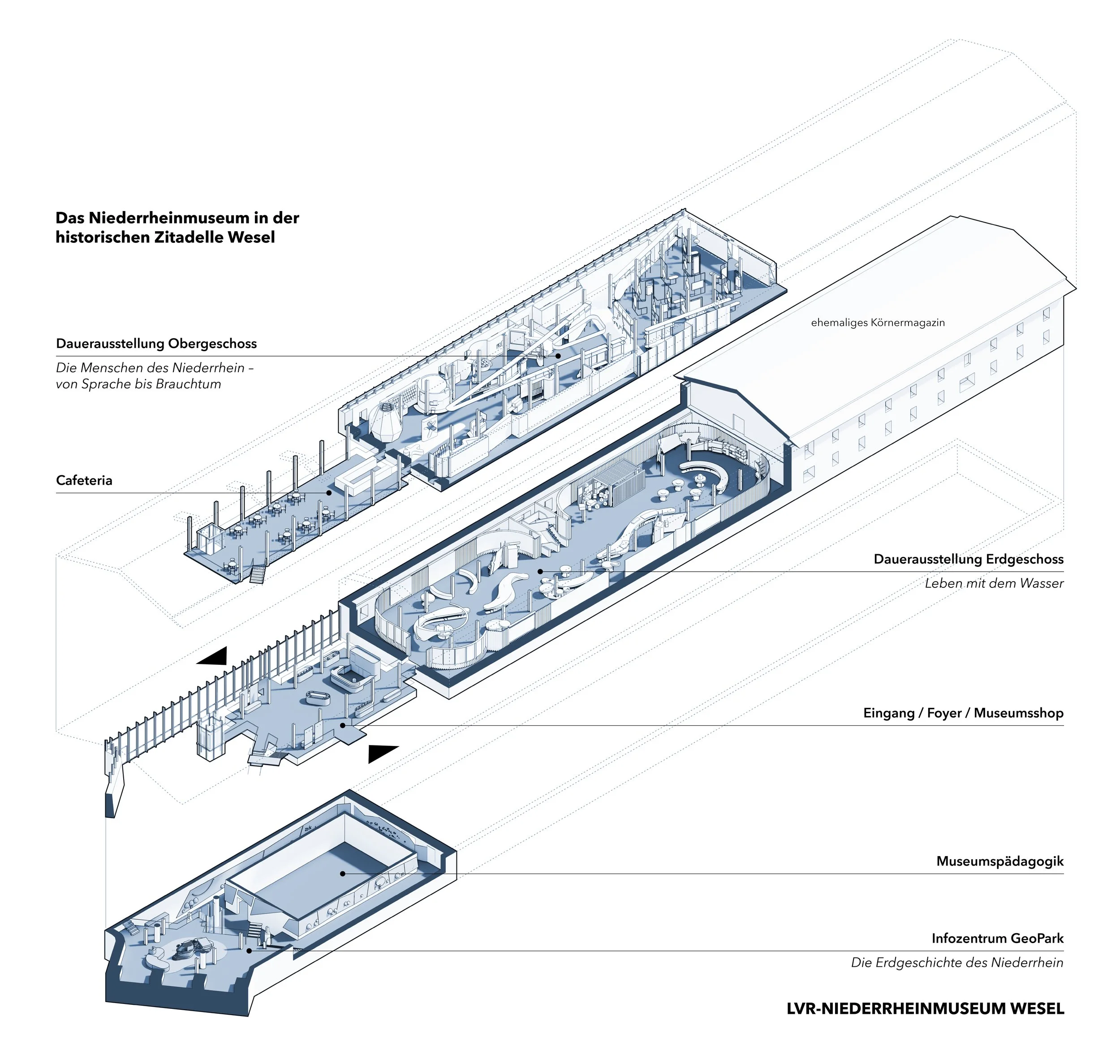
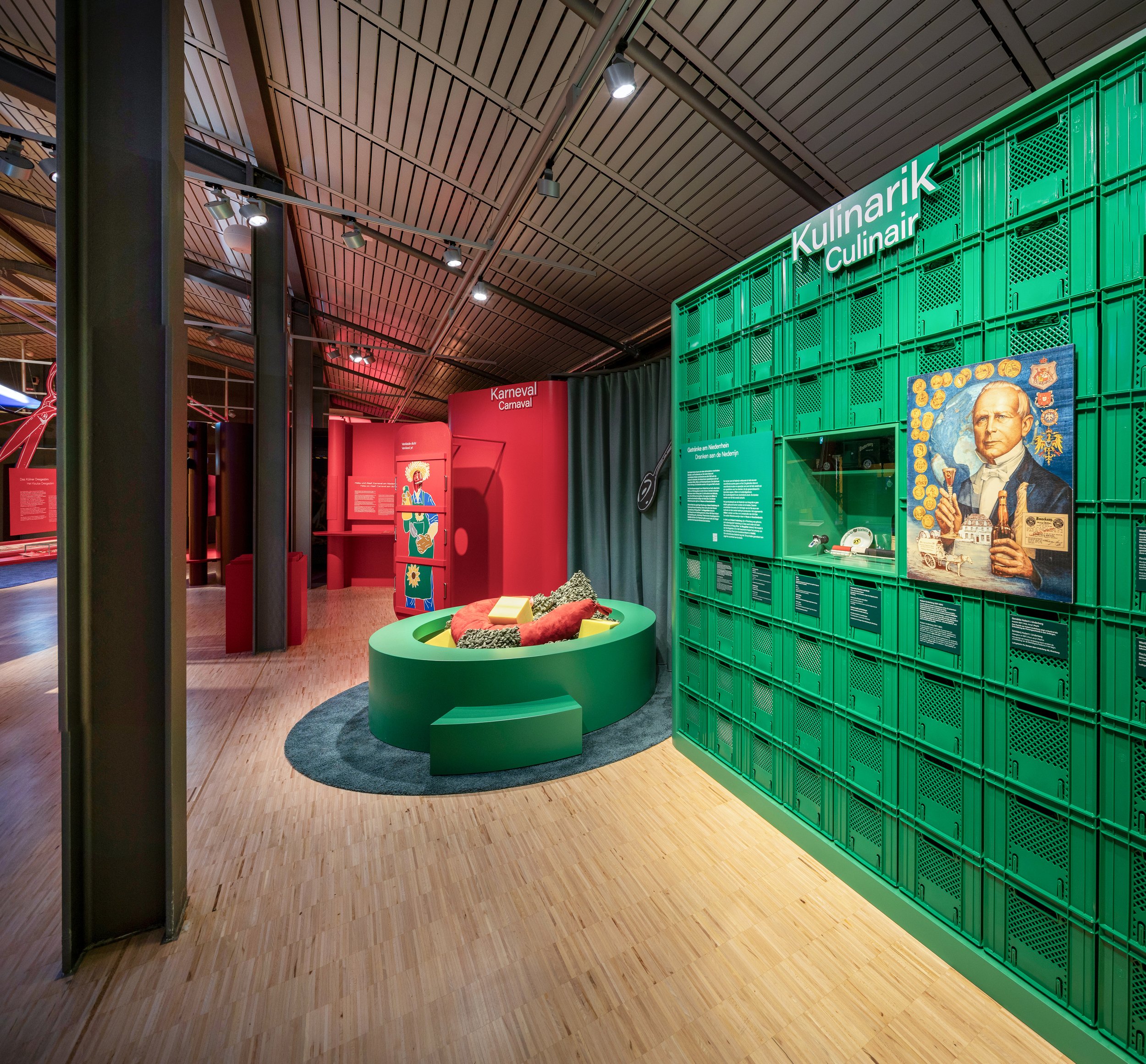
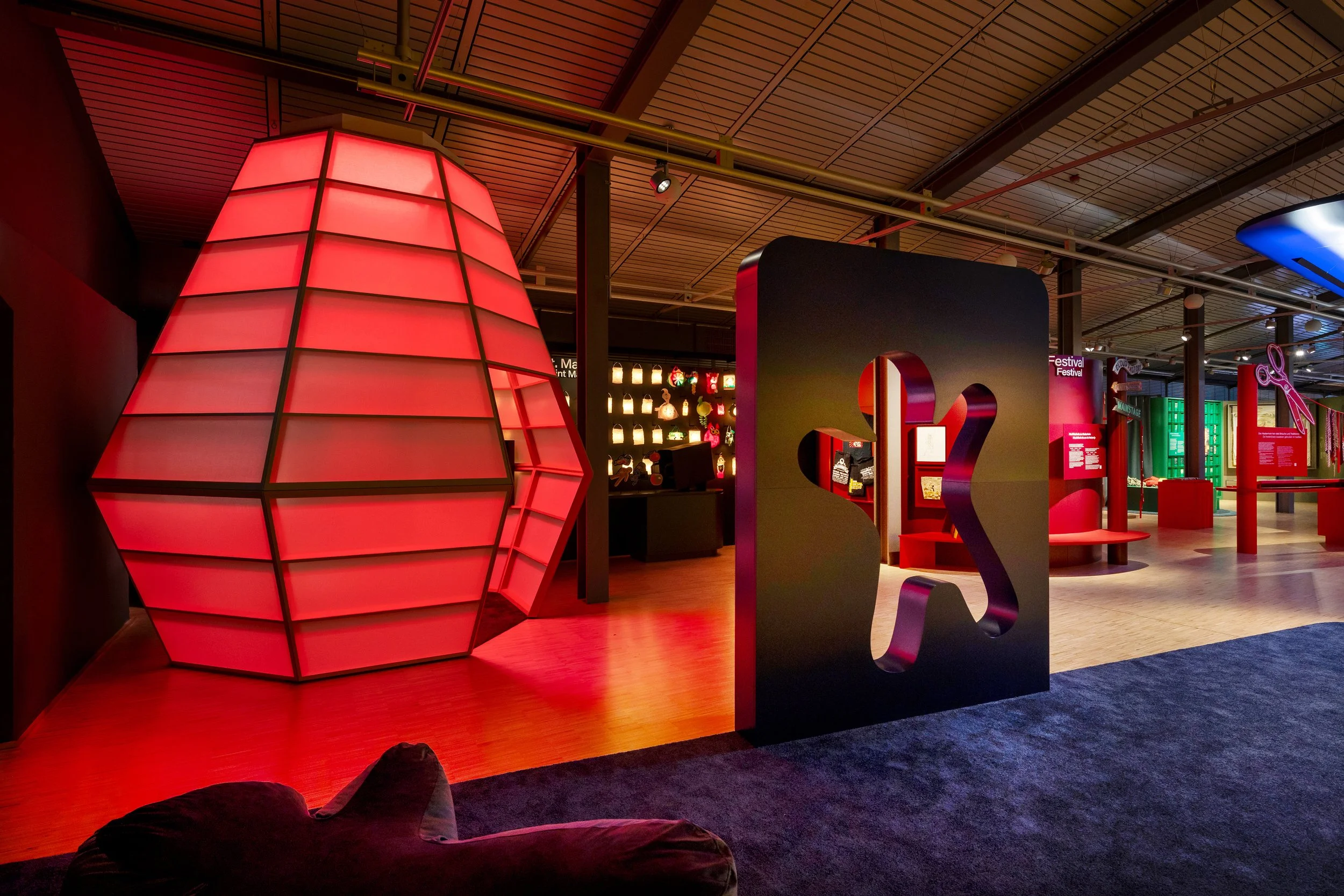
The concept playfully and interactively transports history, progress and the people of the region into an immersive narrative of the Lower Rhine across three floors and over 2.000 square meters. Clear, striking colour schemes and varied spatial settings provide orientation and invite individual exploration.
With their extensive expertise in scenography and exhibition design, COORDINATION plays a key role in establishing the LVR-Niederrheinmuseum as a visitor-oriented experience that connects past and present vividly.
Read more
Living with water
“If you want to explain the Niederrhein area, you must do so via the Rhine – as a stream of ideas, of goods and of cooperation.” This logically led to the development of the museum's overarching theme: “Living with water”.
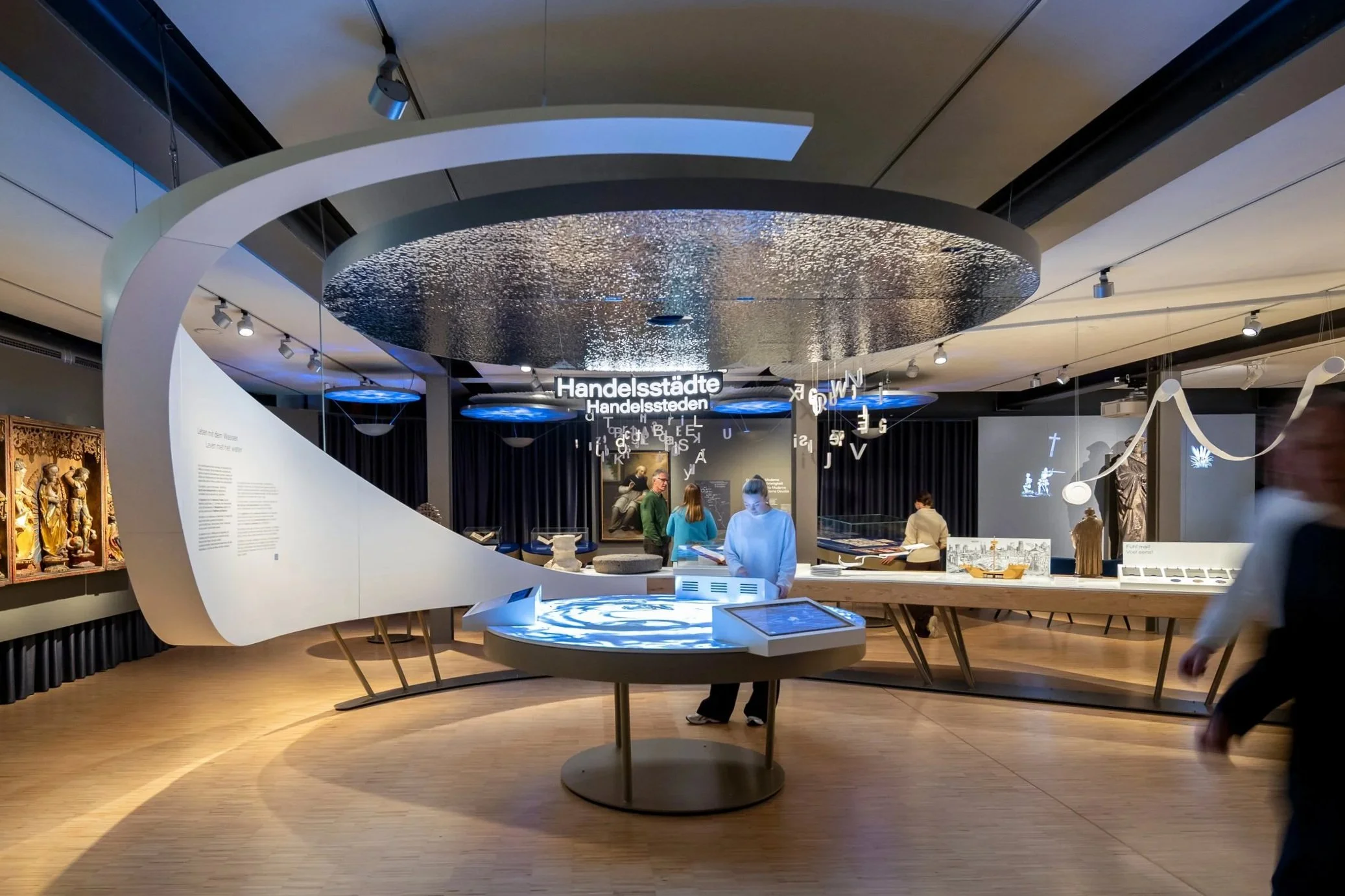
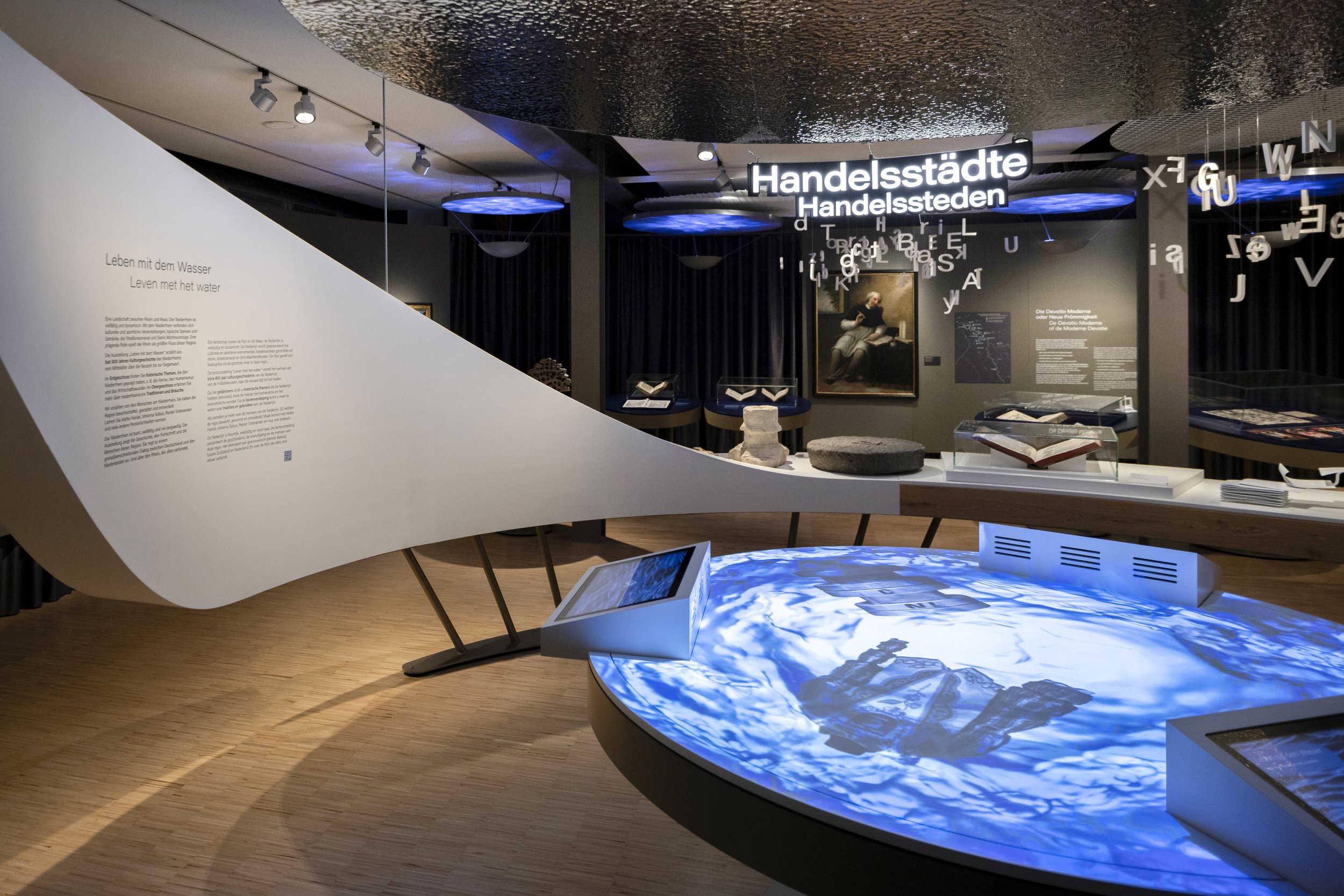
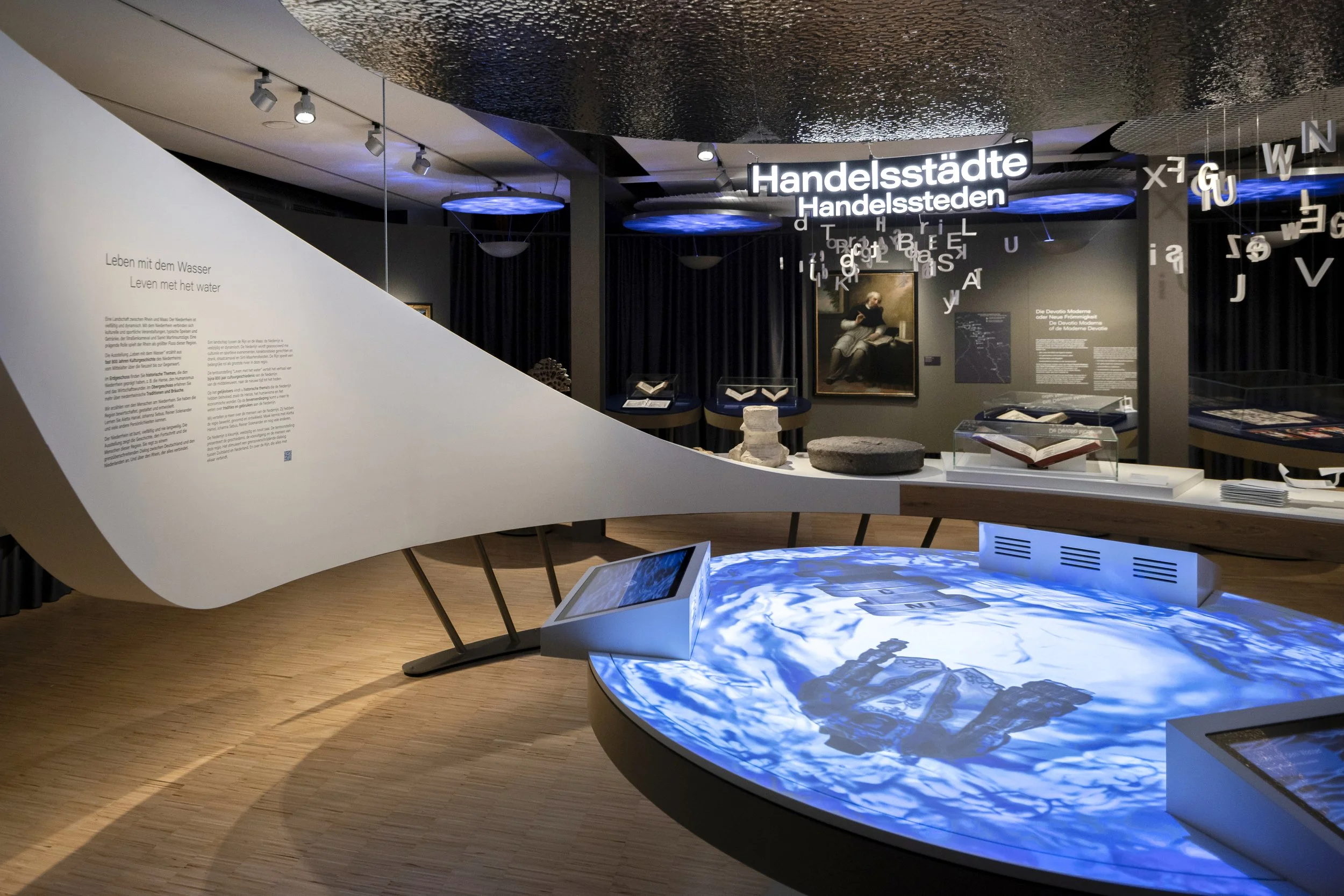
The concept places the Rhine at the centre of focus as a unifying element. An undulating “wave” flows through the ground floor, symbolising the river as a lifeline, a stream of ideas and a historic trade route. Interactive stations bring history to life in an engaging and emotional way. Themed islands build bridges between past and present and invite visitors to enter into dialogue.
Scenography you can touch
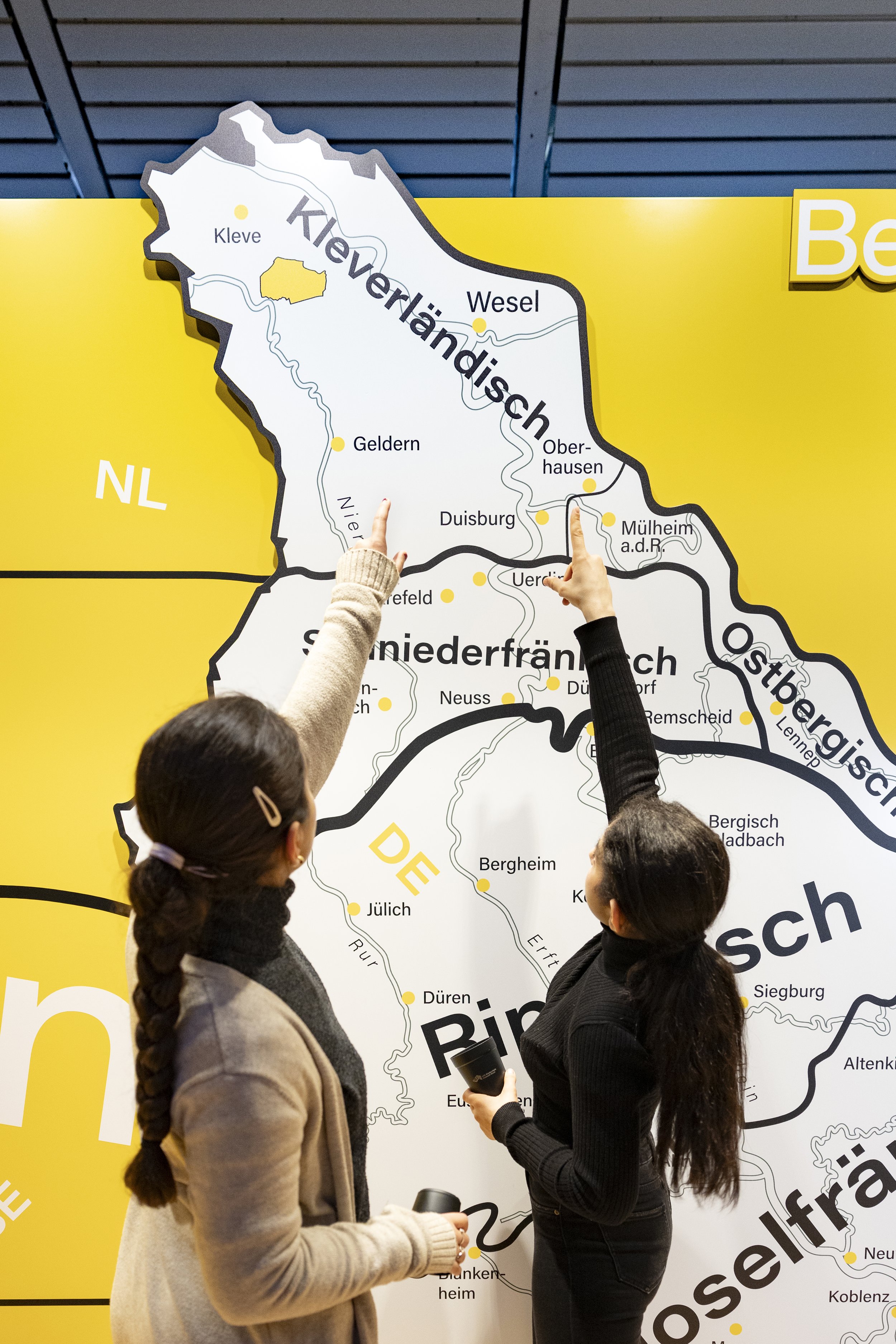
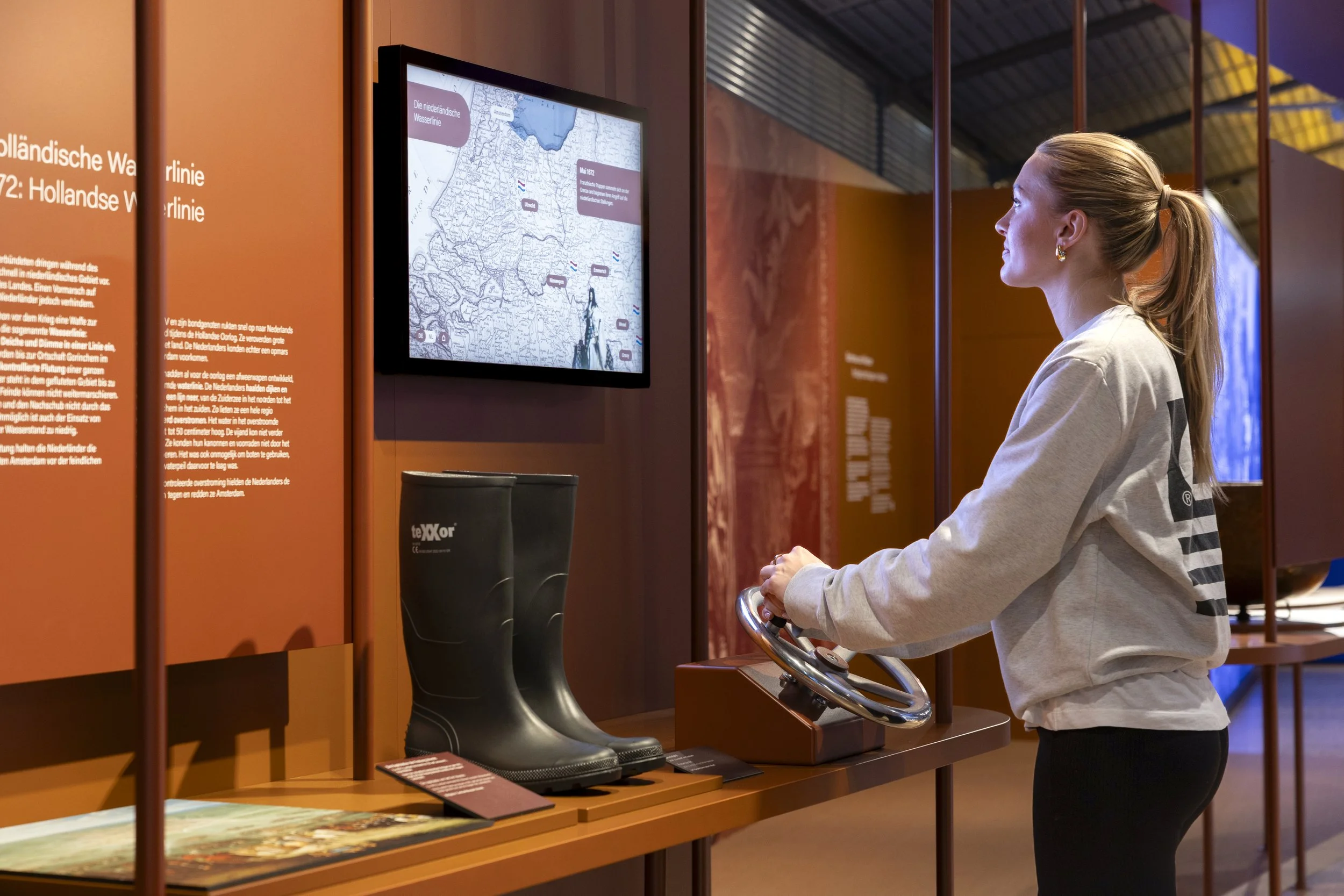
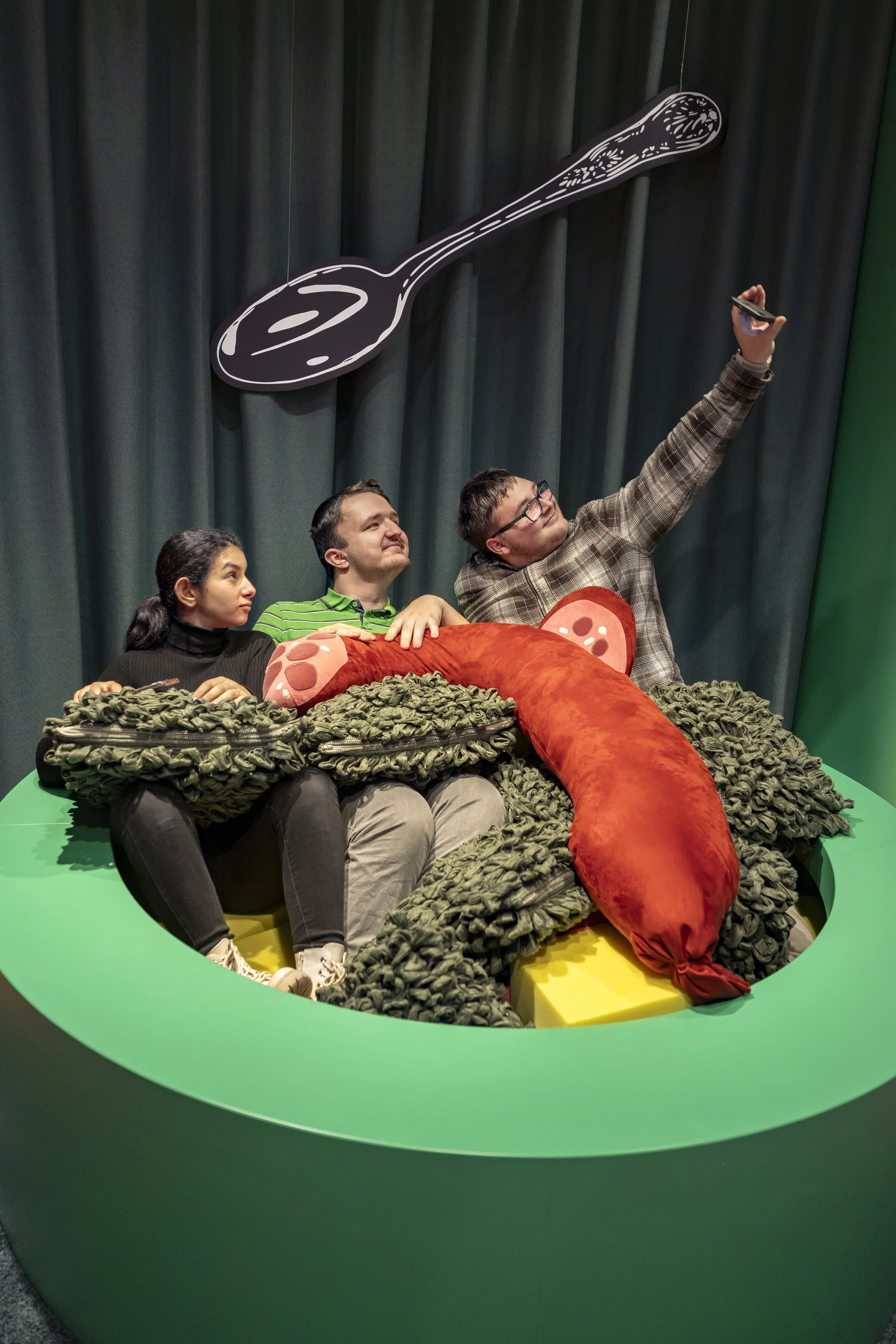
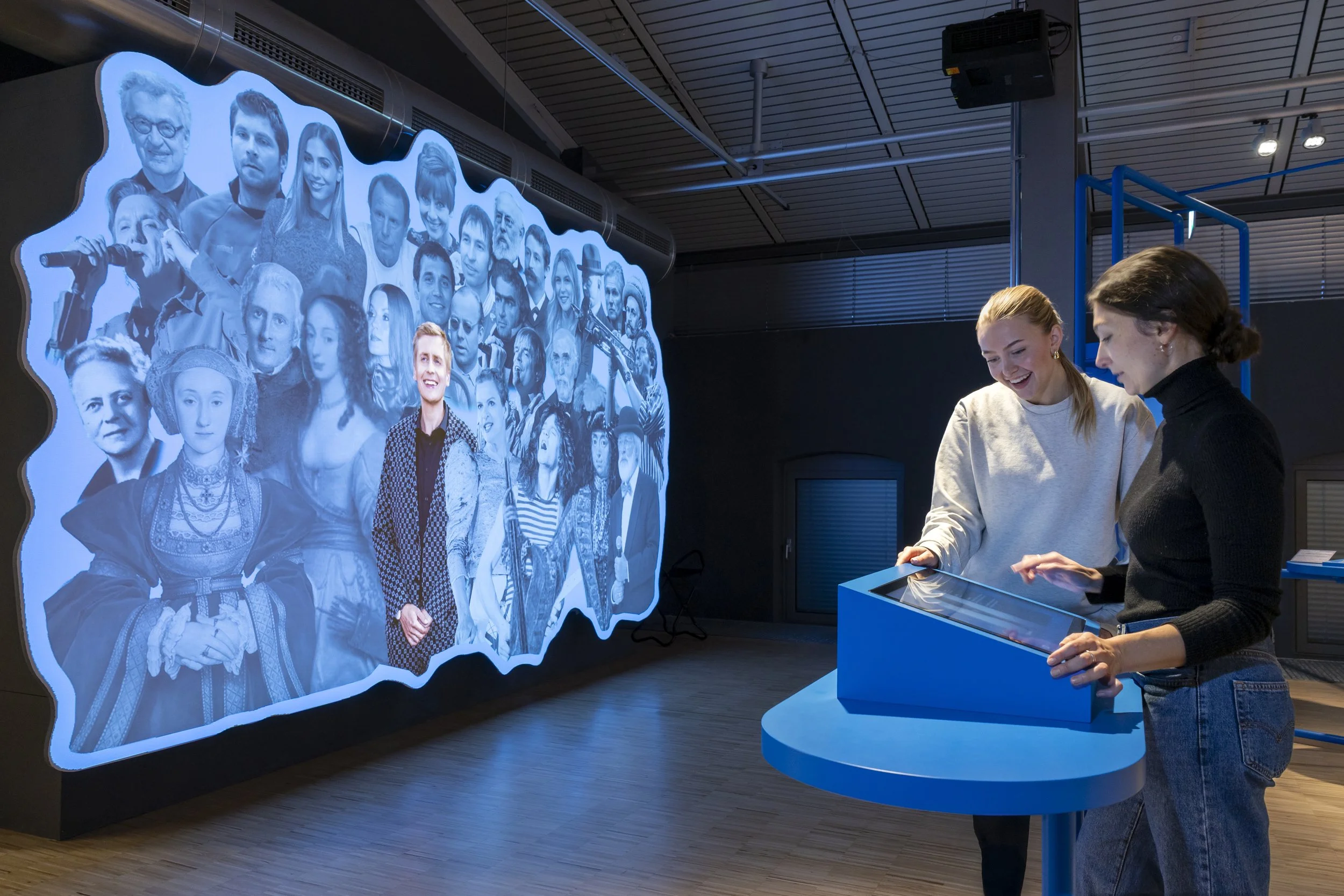
Visitors are guided and encouraged to touch, look, listen, experiment and play. Through this they become protagonists who immerse themselves in the respective historical periods and learn new things or simply remember their own family histories and the fates of recent history. The experience-oriented scenography for the exhibition uses participatory elements to create an emotional approach to the history of the Lower Rhine region from the late Middle Ages to the present day. Numerous tactile and multisensory stations allow visitors to explore historical content through direct, personal experience.
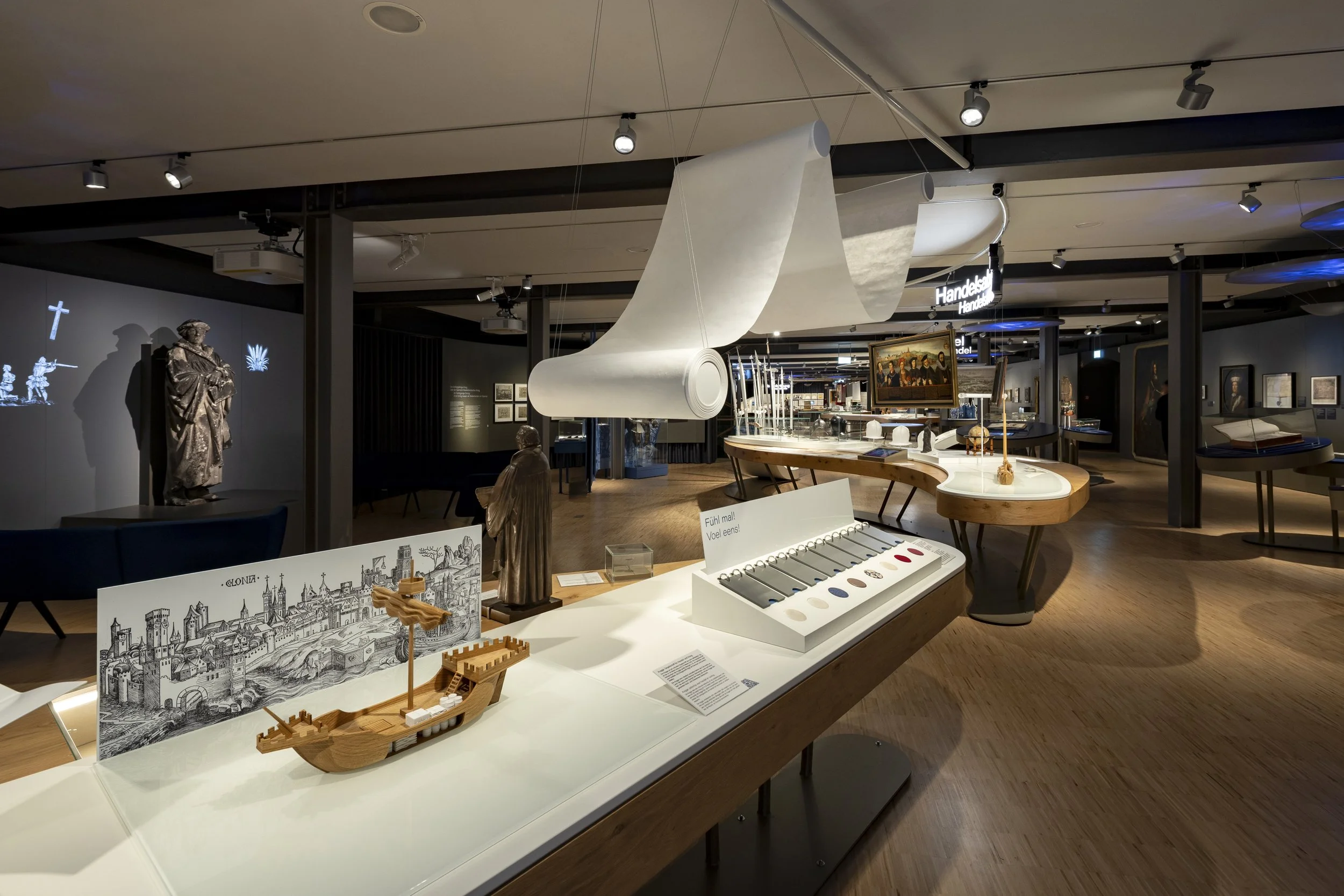
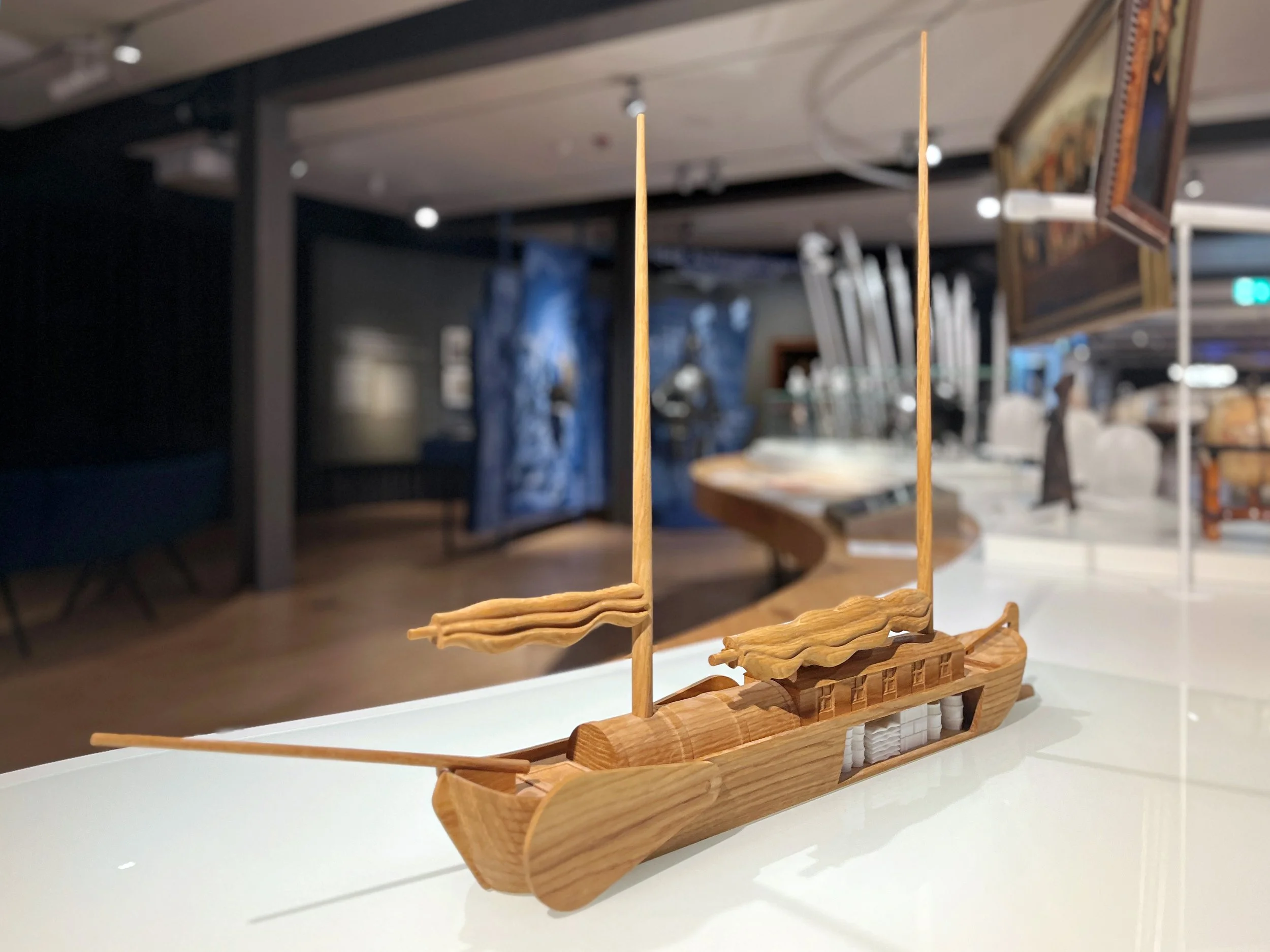
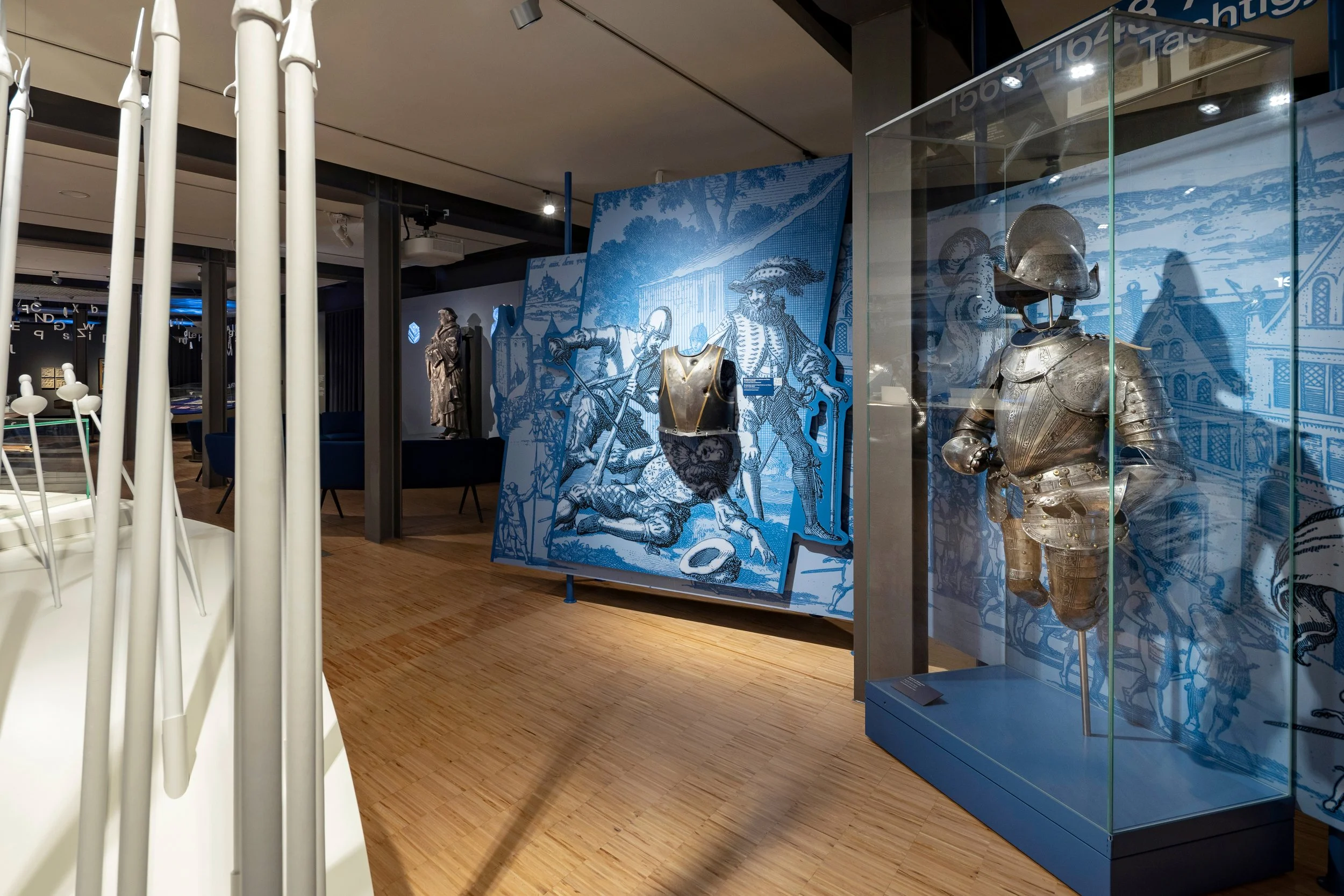
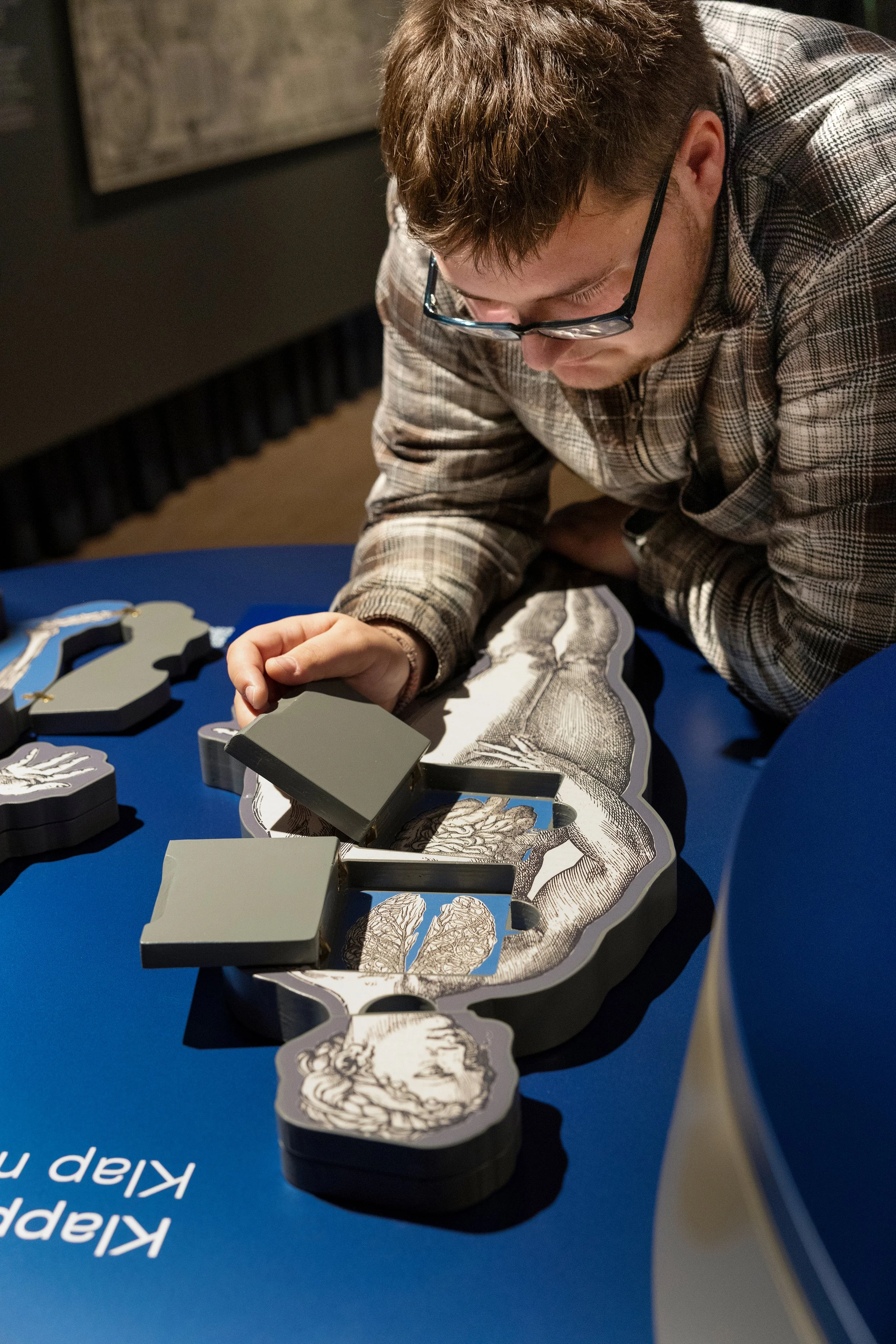
For example, visitors can examine textile samples to discover which animal skins and fabrics were shipped along the Rhine in the 16th century. In the Renaissance section, a fold-out figure reveals the findings of Andreas Vesalius, the Flemish anatomist born in Wesel. For the period of trade with India, spice samples invite visitors to experience characteristic scents. Ship models and historical exhibits illustrate trade along the Rhine and convey the region’s economic significance.
A multimedia experience
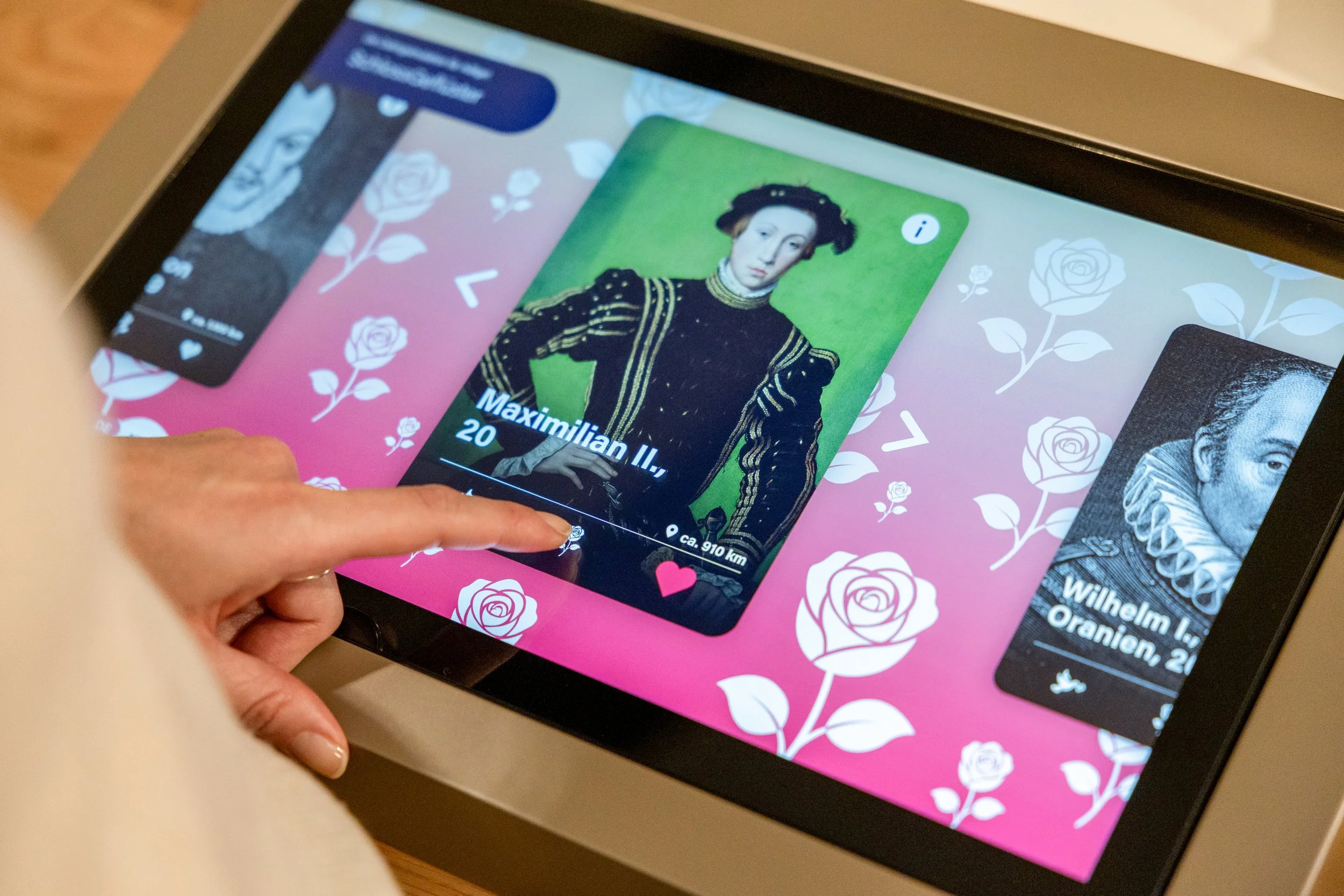
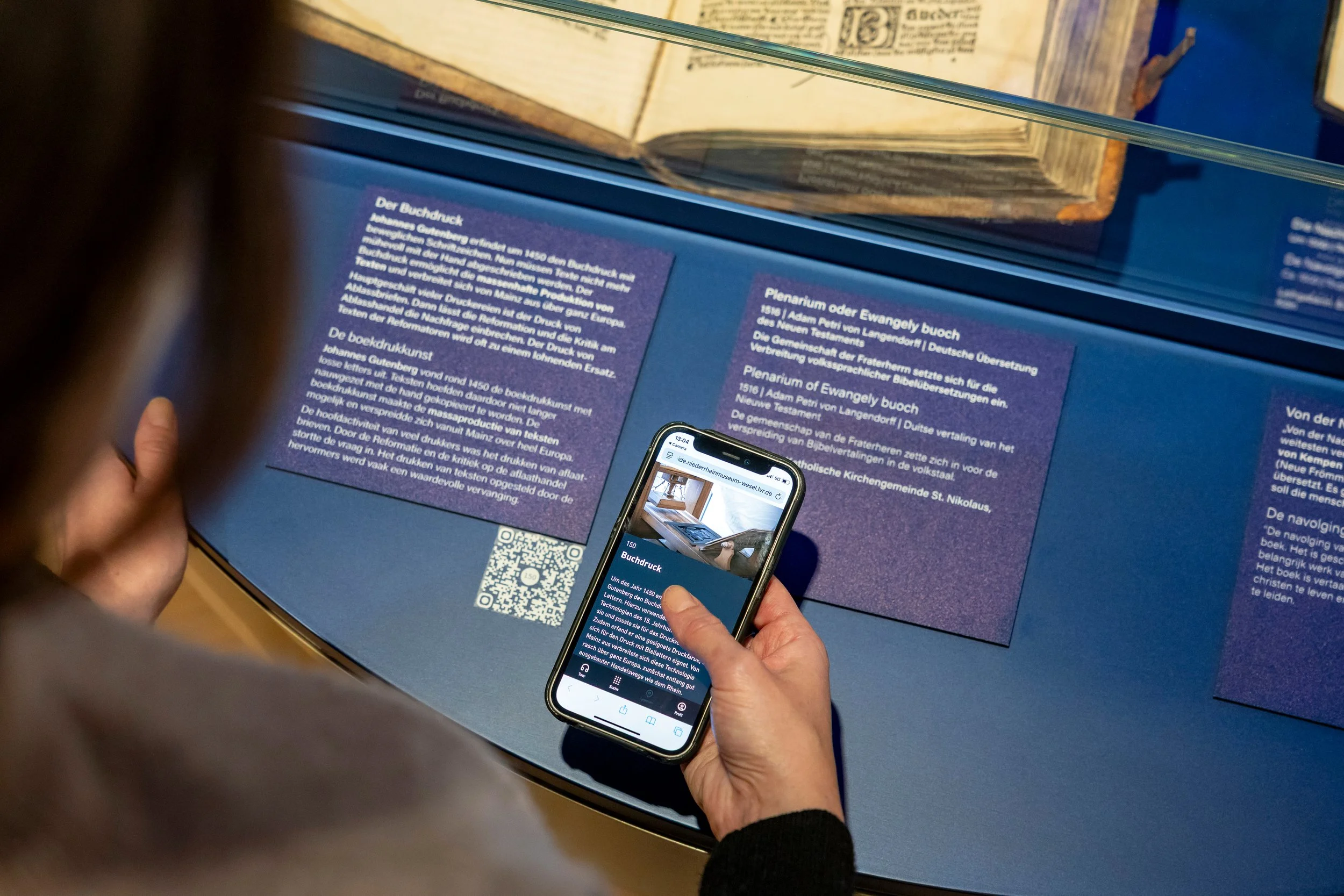
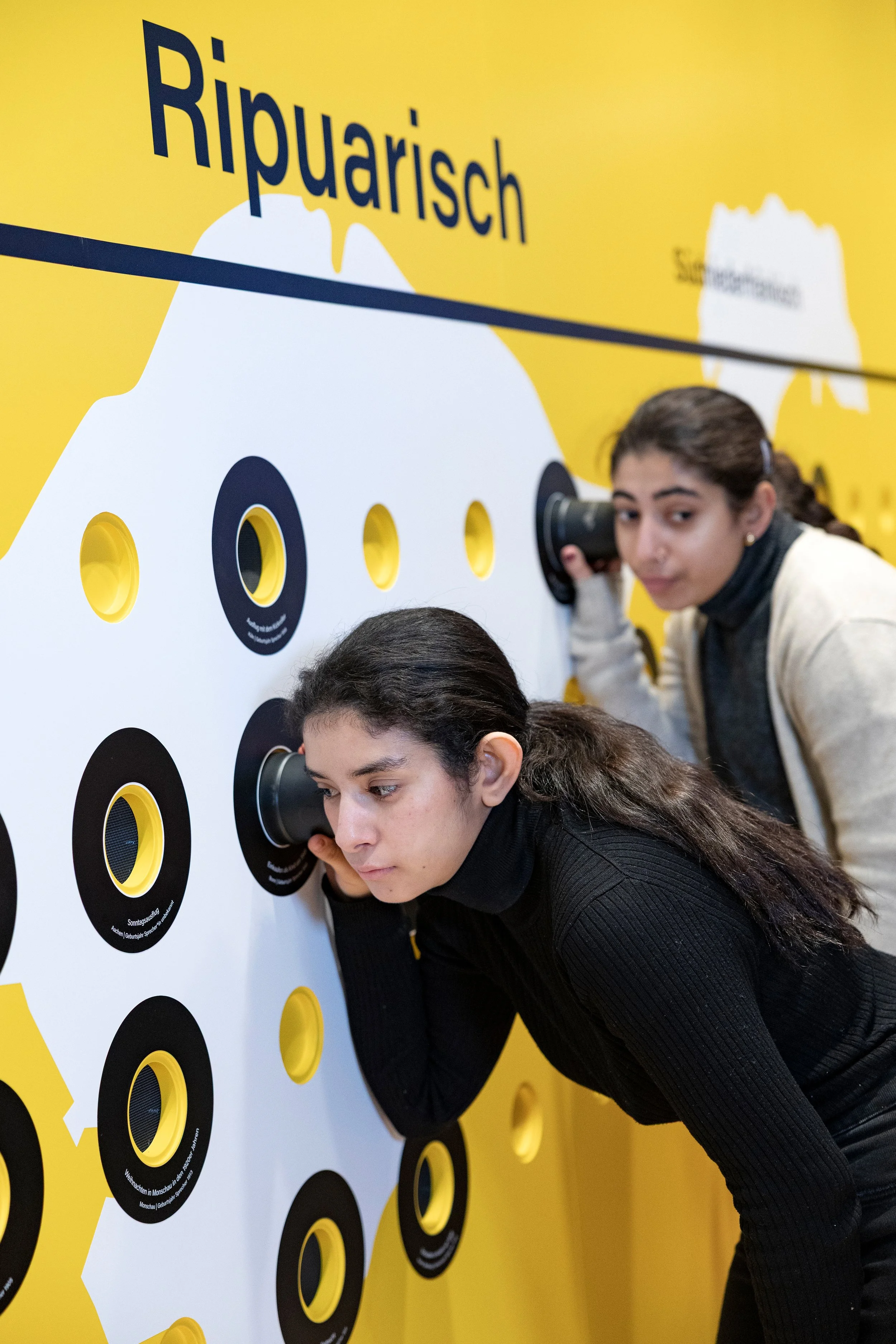
A wide range of media stations engages all the senses – from listening to touching – offering visitors playful access to the exhibition. A highlight in the area of language is the large “listening wall”, where visitors can explore all the dialects of the Lower Rhine via listening cones connected to 45 loudspeakers. In the “drilling game”, visitors compete with each other to explore the geological layers beneath the Rhineland. A “dating app” connects contemporary social behaviour with the practice of aristocratic matchmaking in the 16th century.
A journey through history and the present
COORDINATION’s spatial dramaturgy deliberately creates different experiential environments. While the “stream of goods” connects all areas on the ground floor, the upper floor features individual atmospheric installations that create a lively and varied experience. A friendly vibrancy reflects the identity of the Lower Rhine in all its diversity – from language and traditions to community spirit and contemporary public figures.
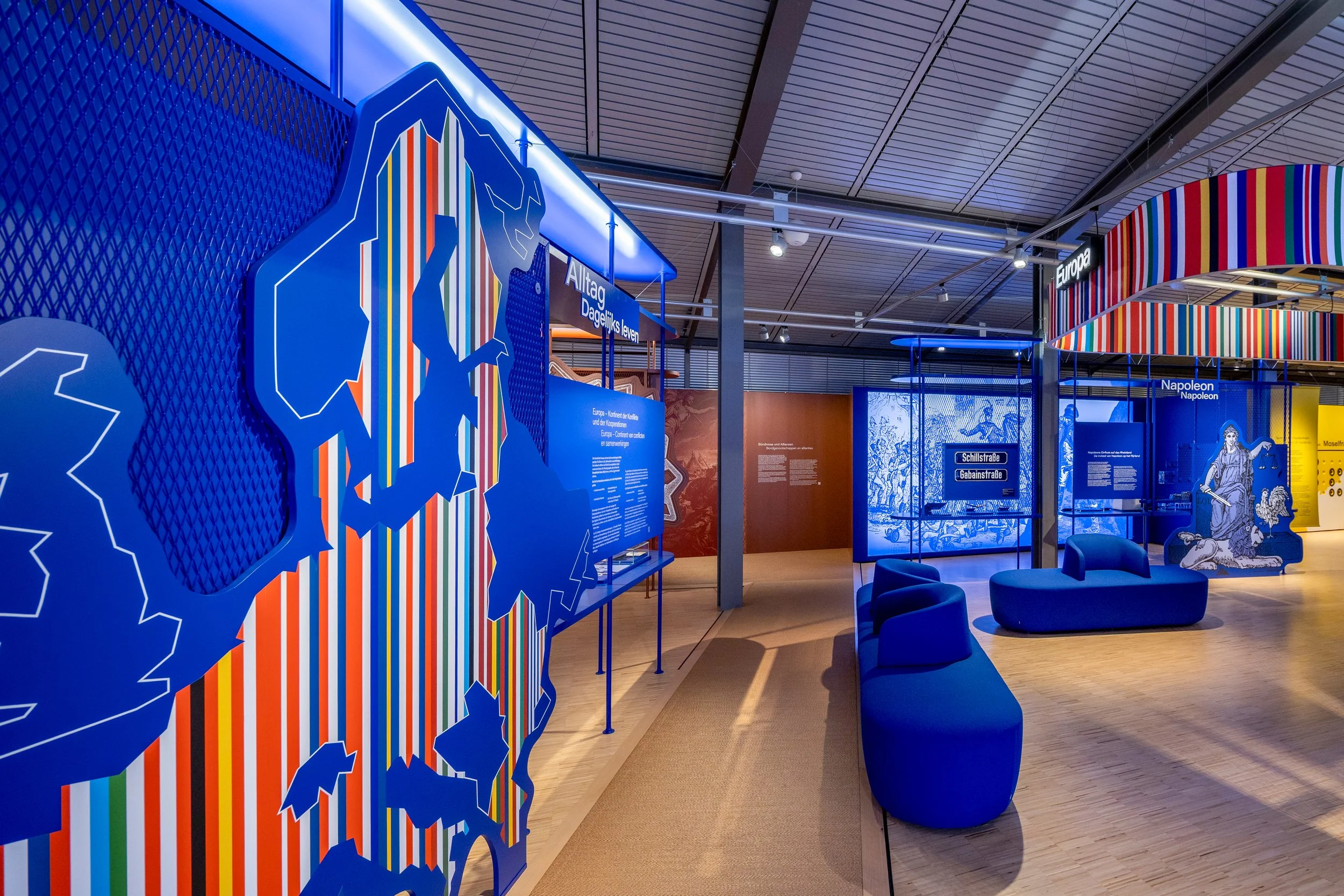
Three large paths lead through the space. They represent the ambivalence between cooperation in times of peace and hard borders in times of war and crisis over the last few centuries. The paths form a central square as a symbol for present-day Europe as a place of encounter and exchange. Strong colours characterise the different thematic complexes: blue walls represent European cooperation, while all periods of war, crisis and confrontation interrupt the paths with copper-coloured, metallic elements.
Facts
| Client | LVR-Niederrheinmuseum Wesel, Corinna Endlich (Director) |
| Curators | Corinna Endlich, Daniela Hellmann, Felix Hildebrand, Thomas Ohl, Sven Remmen |
| Assignment | redesign of the permanent exhibition, foyer and museum shop interior design, scenographie, lighting design, graphic design, exhibits, media technology, spatial interventions, interactive installations, content, furnishings, inclusion and accessibility |
| Design | Jochen Gringmuth, Andrea Dunmore, Mirjam Schwab |
| Project Management | Jochen Gringmuth, Anita Walter |
| Team | Johanna Großmann, Mirjam Schwab, Michelle Heising, Danielle Gringmuth, Max Wosczyna, Stefanie Hunold, Lena Kramer, Sina Friedl, Sabri Jule |
| Graphic Design | Jaroslav Toussaint |
| Media Concept and Planning | Mirjam Schwab, Sven Remmen, Felix Hildebrand, Michael Apelt, Isa Satria |
| Lighting Design | Christian Spork |
| Implementation | 235 Media GmbH, bluelemon Interactive OHG, AVE Audio Visual Equipment GmbH, SEIWO Technik GmbH, Icking Holzbearbeitung GmbH, Megalab Bildkommunikation AG, m.o.l.i.t.o.r. GmbH, Monath + Menzel GmbH, Lichtlogistik-LED Support GmbH, Vennekel & Partner GmbH, Animationsfabrik GmbH, justorange, touchmedia KG, Bode Parkett und Fußbodentechnik, CeMa Malerbetrieb GmbH, Hegerath GmbH, Verfers Elektromontagen GmbH |
| Photos | Koy+Winkel |